

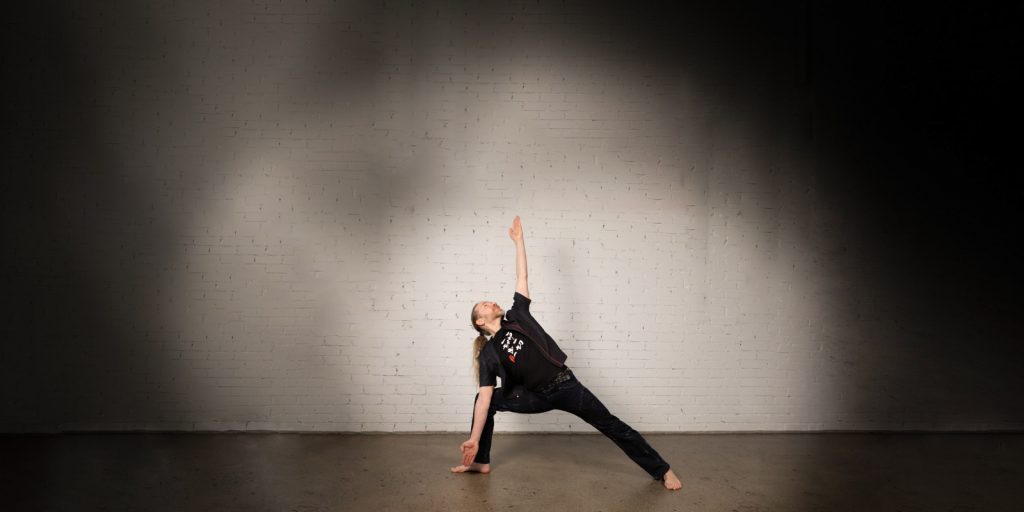
Twenty-six postures and two breathing exercises, practised in a heated room. Everything is repeated twice, and the order always stays the same.
In a class where almost nothing changes, it is a little funny that the name does.
You may have seen this practice called 26&2, Original Hot Yoga or Bikram Yoga in different hot yoga schools around the world. These names overlap, but they do not mean exactly the same thing.
What does 26&2 mean?
26&2 describes what is in the class: 26 postures and 2 breathing exercises, practised in a set order. Numbered names have a history within this tradition, most notably the 84 Asanas of the wider advanced practice that continues to be taught today.
For someone who already knows the sequence, the meaning is clear. For a new student, however, two numbers do not explain very much. This is one reason many schools use the name Original Hot or Original Hot Yoga. It is also the term used by the Original Hot Yoga Association for the complete class.
At Yoga HEL, Original Hot is the name we use for this class. We may also use 26&2 when talking about the sequence itself.
From Kolkata to the West
The practice developed within the health-focused hatha yoga tradition taught by Bishnu Charan Ghosh, who was the brother of Paramahansa Yogananda, and the teachers and students around his school in Kolkata.
This tradition placed great importance on maintaining and restoring health. The practices include therapeutic exercises, yoga postures, breathing exercises and meditation. Stillness between periods of effort, and the contrast between muscular tension and relaxation, remain recognisable characteristics of the practice today.
Bikram Choudhury studied with Bishnu Charan Ghosh. He later taught first in Japan and then decades in the United States. He played a major role in standardising the 26-posture sequence as a group class and making it widely known and popular in the West. This is why many people know the sequence as Bikram Yoga.
Bikram Yoga is also the name of his particular brand, organisation and teacher-training system. Within that system, teachers were trained and certified through the organisation and teach the class using a prescribed script, known as the dialogue, which they are required to memorise word for word.
Some independent schools continue to use the name Bikram Yoga simply because it is the name their students recognise. Others use 26&2, Original Hot or another name. They might do so to make clear their distance from the Bikram brand or Bikram Choudhury as an individual, because they feel a different name better reflects how the practice now exists within the wider hot yoga community, or for any combination of these reasons.
The decision to stop attaching a practice to one teacher’s name is part of a wider reckoning across modern yoga. Communities connected with several influential teachers have had to respond to survivor testimony, independent investigations and legal findings concerning sexual misconduct and abuses of power.
This does not necessarily mean changing the name of an entire yoga tradition. In the case of Bikram Yoga, however, the practice itself carried the personal and commercial name of one teacher. For many schools, adopting another name was therefore a serious decision about separating a continuing practice from the individual and organisation whose name had come to define it in much of the West.
Why do we use Original Hot?
Yoga HEL is an independent studio founded in 2024. We chose the already established name Original Hot because it describes the class without making one brand, individual, organisation or prescribed teaching method the sole definition of the practice.
The precise words our teachers use will vary. Their personalities, experience and ways of explaining the practice will vary too. They have trained through different teacher trainings and continuing education programmes, and their teaching is shaped by continued practice, further education, an understanding of the wider yoga world and experience in the classroom.
Variety in training or teaching style does not mean that anything goes. Original Hot remains a specific, standardised practice: the sequence, order and repetitions are fixed. Teachers are trained to understand the postures and the structure and purpose of the sequence in depth, so that they can teach a clear and consistent class.
There are now several substantial training routes that preserve the sequence and its history while also teaching contemporary anatomy and physiology, posture technique, teaching skills, student care and supervised classroom practice. Their methods and emphasis may vary, but they train teachers to teach a recognisable class, not simply to improvise around a familiar list of postures.
This reflects the hot yoga community as it exists today. There are many teachers, schools, training programmes, professional relationships and overlapping small communities. These connections are real and historically meaningful, but they cannot be reduced to one perfectly straight teacher-to-student line.
Like any living tradition, the practice has developed as it has passed between teachers, generations and countries. Each teacher brings experience, interpretation and emphasis, even while the underlying class remains firmly recognisable. Calling the class Original Hot allows us to acknowledge both sides of this: a broad, living tradition and a clearly defined practice.
Is Original Hot the whole practice?
No. The 26&2 sequence is a foundation, not the full extent of the practice from which it developed.
The wider tradition contains many more postures, therapeutic exercises and progressions. Historical publications connected with Bishnu Charan Ghosh and his students describe numerous arrangements of postures rather than one universal series. A comparison of several of these texts identifies 113 recorded postures, alongside a much broader collection of therapeutic exercises. The wider practice has also continued through living teachers. It was not simply lost and later reconstructed from books.
Emmy Cleaves was one of the central teachers through whom the 84-asana sequence continued as a living modern hot-yoga practice. The e84 training taught by Esak Garcia today identifies what they teach as the 84-asana tradition as taught by Emmy Cleaves. Many other teachers including Tony Sanchez also continued to practise and teach the broader intermediate and advanced systems beyond the beginning sequence.
At Yoga HEL, students can explore this wider practice through Roots, Original Hot Expanded and The 84 Asanas. These classes reveal more of the broader practice, while Original Hot remains a stable foundation within it.
Why the same sequence every time?
We do not teach Original Hot because we believe one sequence can contain everything yoga has to offer. We teach it because repetition provides a particular kind of experience of the practice.
At first, much of your attention goes into learning the postures and remembering what comes next. As the sequence becomes familiar, you can pay closer attention to how you practise: your breathing, effort, concentration, habits and reactions.
The sequence stays the same, but you do not. Your balance, strength, mobility, energy and understanding change. Because the practice remains relatively constant, these changes become easier to recognise.
Returning to the same postures also gives technical understanding time to develop. You can test an instruction, notice the result and gradually refine what you are doing.
Repetition teaches patience and perseverance. Novelty no longer hides the places that need attention, and not every class has to feel successful, exciting or easy to be valuable.
Over time, the familiar sequence builds knowledge not only of the postures, but of your own practice, habits and responses.
A foundation for a wider practice
Ever-changing classes have their own value. They offer variety, exploration, creativity and opportunities to develop new movements and skills. A repeated sequence offers something different.
Original Hot is a specific, recognisable set class within a much wider yoga tradition. Its name distinguishes this foundational practice from the many other forms of hot yoga now taught, without suggesting that it represents the whole tradition.
The purpose of practice is not only to collect new asanas, tricks or skills. When the sequence you return to remains stable, that stability creates room to learn, develop and change.
Not just the asanas, but you.
Comments are closed